How it works
Neuroscience, books, and more
Neuroscience: The science of the brain
Our brains are remarkably powerful with limitless potential.
Our brains use billions of nerve cells or neurons to connect the brain to the body to assess what’s going on and then share the information with other parts of the brain to activate a response. These neurons provide efficient and lightning-fast communication from one region of the brain to the other by traveling along neural pathways. Neural pathways are used by one neuron to communicate information and initiate a response from another neuron.
Each time we have a thought or reaction to a situation, our brain creates a neural pathway for that situation and its respective thoughts and reactions. With each repetition, this neural pathway is strengthened. Once strengthened, this pathway then becomes an almost instinctive thought and reaction for that particular situation, and similar ones too.
The secret no one tells you is that our brains can be retrained to respond and react differently without needing to change the circumstance. We can learn to harness the power of our brains to work for us, not against us; to not only to prevent mental exhaustion but to set ourselves up to triumph. The brain isn’t static, it doesn’t just keep the neurons and neural pathways from birth, it is always growing and creating new neurons and new neural pathways.
Neuroplasticity is our brain’s ability to create new pathways used by our neurons.
[Check out an explainer video from the Perth Brain Centre: here.]
As we go through life, the brain is always, constantly building new neural pathways, reinforcing existing ones, and making others dormant. We can think of this collection of pathways as a database or large filing cabinet built from the massive collection of our life experiences, from the people we interact with to the movies we watch, to the books we read, to what we eat, to the places we travel to – absolutely everything we do.
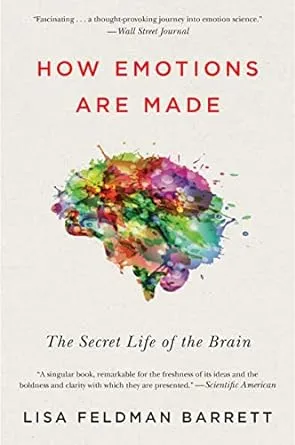
In How Emotions are Made, Dr. Lisa Feldman Barrett describes how our brains use all our past experiences to give meaning to the situations in our present and help us determine what emotions we are experiencing now. Our brain is unique to each of us since none of us have had the exact same experiences or the same reactions to the same event – no two people have the same neural pathways. The truly remarkable aspect of the brain is that since it is constantly collecting new information to be used for future predictions, we can then start to change this collection of experiences by changing our experiences now. We can start to use how the brain works to our advantage. We don’t need to be at the mercy of emotions that arise unbidden to control our behavior, we can be the architect of these experiences.
We can strengthen our ability to respond to situations with intention rather than reacting out of habit, bridging the gap between understanding our thoughts and transforming them.
Rebuilding my own confidence
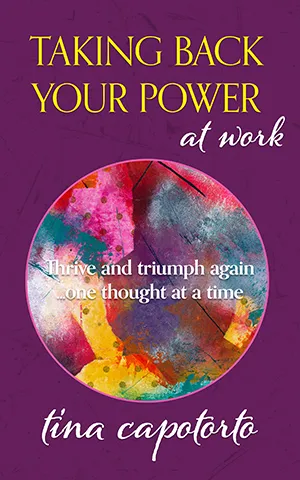
What started out as a short article with tips on how to rebuild your confidence after a downsizing soon became a book, with tips on how to rebuild your confidence in many other workplace situations. The more I explored how the brain works, testing different brain hacks myself, the more I wanted to share what worked well with others. My hope is that my journey will inspire you to try, try something, try anything; keep what works and dump what doesn’t.
After having worked in toxic work environments with toxic people for many years, my confidence got so eroded that it led me to total corporate burnout. The harder I worked and the more I practiced, what I now refer to as the corporate commandments, the worse I felt. It didn’t matter what job I had, what industry I worked in, how many targets I exceeded, or how many hours a day I worked; I was not achieving the success promised by these. In fact, the harder I worked the worse things got. I became more and more disheartened until I reached total corporate burnout. On my journey to recovery, I realized that I had inadvertently given my power away, and if I could give my power away then I could take it back. I did and you can too!
The book describes the journey to rebuilding your confidence, by introducing a unique metaphor of towns. These imaginary places help you visualize your thought-journey, helping you recognize the thoughts that don’t serve you and navigating towards the thoughts that do. It’s a practical tool to explore the many thoughts we encounter on top 10 workplace frustrations.
The app lets you explore your thought-journey in an interactive way, specific to your particular situation, and in your back pocket (because who wants to carry a book around?).
For too many people, a single upsetting moment can echo for hours – or even days. Blindsided by a rude coworker, a dismissive manager, or an unrealistic task leaves us powerless, as though we are at the mercy of our surroundings. Our frustration builds, resentment deepens, and we’re left unappreciated and drained.
Picture yourself walking into a meeting calm and confident, or navigating a tough conversation with clarity and optimism. This isn’t wishful thinking. With small, intentional shifts in your thoughts, you can reclaim your power and navigate even the toughest situations with ease.
Each page offers easy to follow thought-journeys to harness your brain’s power and make it work for you, not against you. Let’s take back control together – one thought at a time – because every thought matters.
Written by someone who’s been through it all, from stress to burnout and back, this book is more than a guide – it’s your companion to thriving at work.
Your power is just one thought away.
Ready to claim it now?